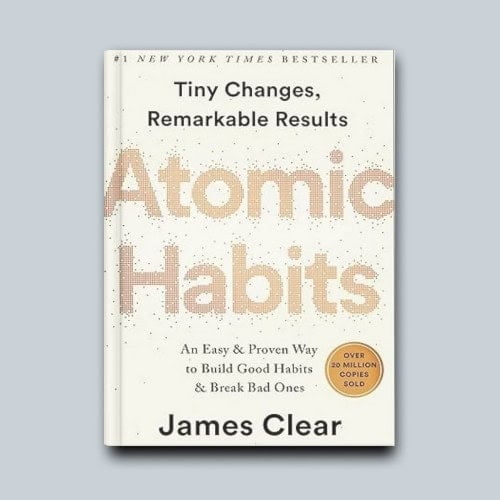
Atomic Habits — James Clear

James Clear’s Atomic Habits is built on a deceptively simple idea: you don’t rise to the level of your goals, you fall to the level of your systems. This comprehensive guide explores how small changes compound into remarkable results — and how to build the systems that make good behaviour automatic.
The Power of Tiny Changes
Small incremental improvements create powerful cumulative effects. Clear demonstrates that marginal gains build a foundation for remarkable progress. Improving by just 1% daily yields 37x better results annually, illustrating how consistent minor adjustments transform lives across health, productivity, and personal development.
The key insight: “You do not rise to the level of your goals. You fall to the level of your systems.”
Starting with manageable changes — like a morning water habit — creates confidence and momentum for bigger improvements.
About James Clear
Clear became a leading expert in personal development through researching habit science and behaviour modification. His background in habit formation combines extensive research with practical, actionable strategies.
A high school baseball injury forced Clear to rebuild his life through small, incremental changes — an experience that shaped his understanding that lasting progress emerges from systematic improvement rather than ambitious goals.
The Core Framework
The Habit Loop
Habits operate through four components:
- Cue: The trigger initiating the habit
- Craving: The motivation driving the behaviour
- Response: The actual behaviour performed
- Reward: The benefit gained from the action
Identifying and manipulating these elements enables meaningful habit change.
Identity-Based vs. Outcome-Based Habits
Identity-based habits focus on becoming a certain person rather than achieving specific results. This approach creates more sustainable change because it aligns with your self-image and values.
Three Layers of Behaviour Change
- Outcomes: Achieving specific results
- Processes: Altering systems supporting those results
- Identity: Shifting beliefs and self-perception
Identity-level changes produce the most lasting transformations.
The Four Laws of Habit Change
First Law: Make It Obvious
Awareness precedes change. Two powerful strategies:
Habit Stacking: Layer new habits onto existing routines. Formula: “After [CURRENT HABIT], I will [NEW HABIT].” For example, floss immediately after brushing teeth.
Implementation Intentions: Specify exact timing and location — “When I wake up, I will meditate for 10 minutes” — to dramatically increase follow-through.
Environmental Design: Arrange your surroundings to support positive habits. Placing a book on your nightstand encourages reading; removing social media apps reduces temptation.
Second Law: Make It Attractive
Dopamine-Driven Feedback Loops: Associate habits with pleasurable experiences. Listening to favourite music while exercising creates positive associations, making the activity more enjoyable.
Temptation Bundling: Pair enjoyable activities with necessary tasks. Watch your favourite show only while exercising or doing laundry.
Social Influence: Habits adopted by your peer group gain stronger traction. Surrounding yourself with people embodying desired habits increases your motivation.
Third Law: Make It Easy
The Two-Minute Rule: Make initial habit steps require less than two minutes. Commit to reading two minutes daily, then gradually extend duration once the routine establishes. The goal is to master the art of showing up.
Reducing Friction: Minimise obstacles blocking habit adoption. Choosing a nearby gym eliminates commute barriers; laying out workout clothes overnight removes morning resistance.
Automating Habits: Use technology and environmental design to reduce decision-making — automatic savings transfers, medication reminders, recurring calendar blocks.
Fourth Law: Make It Satisfying
Immediate Rewards: Reinforce habits with instant gratification. The challenge with most good habits is that the rewards are delayed. Bridging that gap with something enjoyable right after keeps you on track.
Habit Tracking: Monitor progress visually through apps, journals, or checkmark systems. Tangible evidence of effort boosts motivation and creates continuity.
The “Never Miss Twice” Rule: Missing one day is an accident. Missing two is the start of a new habit. Recover quickly without discouragement.
Breaking Bad Habits
The same four laws work in reverse for eliminating bad habits:
- Make it invisible (remove cues from your environment)
- Make it unattractive (reframe the consequences)
- Make it difficult (increase friction)
- Make it unsatisfying (add accountability)
The Identity Shift
The most powerful insight in Atomic Habits is that lasting change requires a shift in identity, not just behaviour. Every action is a vote for the type of person you wish to become. When you start thinking of yourself as “someone who reads” rather than “someone trying to build a reading habit,” the behaviour becomes self-reinforcing.
Overcoming Common Obstacles
Plateau and boredom: Diversify routines and establish small milestones. The Goldilocks Rule says humans experience peak motivation when working on tasks at the edge of current ability — not too hard, not too easy.
Multiple changes at once: Prioritise one habit at a time. Trying to change everything simultaneously is the surest way to change nothing.
Conclusion
Applying these principles enables lasting behavioural transformation. The four laws provide a comprehensive framework for sustainable personal development. Small, consistent changes produce extraordinary results when compounded over time — and Atomic Habits gives you the most practical toolkit available for making that happen.