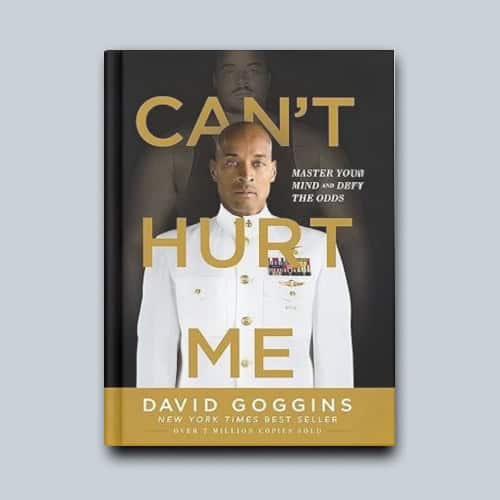
Can't Hurt Me — David Goggins

David Goggins’ Can’t Hurt Me stands apart as a raw memoir that transforms personal suffering into a framework for mental strength. Through his journey from a childhood defined by hardship to becoming a Navy SEAL and ultramarathon athlete, Goggins demonstrates how psychological resilience can overcome limits that most of us will never approach — and how the principles that got him there are available to anyone willing to use them.
Key Takeaways
- The 40% Rule — When you believe you’ve reached your limit, you’re typically accessing only about 40% of your actual capability.
- Callusing the Mind — Similar to physical toughening, the psyche strengthens through deliberate exposure to uncomfortable situations.
- The Accountability Mirror — Confronting personal flaws with unflinching candour is the foundation for meaningful transformation.
- Embrace Suffering — Pain functions as a catalyst for developing resilience and self-mastery, not something to avoid.
- Discipline Over Motivation — Consistent habits create lasting change where temporary inspiration fails.
Why Does This Book Hit So Hard?
A Life Built on Hardship
Goggins overcame poverty, racism, and abuse — circumstances that could have destroyed him. His willingness to share these painful experiences honestly helps readers understand that resilience develops through adversity rather than comfort. This isn’t someone writing from a place of privilege about how to work hard. He earned every word.
From Broken to Elite
Beyond surviving difficult circumstances, Goggins achieved extraordinary physical accomplishments as a Navy SEAL, Army Ranger, and endurance athlete. His trajectory illustrates that disciplined commitment enables profound personal transformation regardless of starting point.
Raw, Unfiltered Honesty
Unlike polished motivational figures, Goggins acknowledges his mistakes, insecurities, and darker moments without sanitising them. This vulnerability creates authentic connection and credibility with readers — you believe him because he doesn’t pretend to be anything other than what he is.
The Key Lessons
The 40% Rule: You Have More Left
This concept proposes that perceived limits are largely self-imposed. When your mind says stop, your body typically has 60% capacity remaining. The rule isn’t license to ignore genuine pain signals — it’s about recognising how often we quit at the first uncomfortable whisper rather than our actual limit.
Callusing the Mind
Intentionally pursuing difficult situations builds psychological resilience over time. Goggins describes deliberately putting himself in uncomfortable situations — cold water, physical exhaustion, social discomfort — not to prove something, but to expand what feels tolerable. The mind adapts the same way muscles do: stress, recovery, growth.
The Accountability Mirror
Stand in front of a mirror. No lies. No excuses. No softening. What are you actually doing versus what you claim to want? This practice of direct confrontation with personal weaknesses maintains focus on improvement more effectively than any amount of self-compassion.
Embracing Suffering
Rather than viewing suffering as something to avoid, Goggins reframes it as revealing our authentic capabilities and character. The discomfort is the point — not because suffering is noble, but because consistently choosing difficulty expands what you’re capable of.
The “Challenge” Format
Each chapter concludes with exercises requiring reflection, journalling, or physical action. This transforms the book from passive reading into active participation — you’re not just reading about Goggins’ journey, you’re being prompted to undertake your own.
Where the Book Falls Short
The extreme lifestyle isn’t for everyone. Goggins’ ultramarathon running and SEAL training represent intensities that may feel unattainable or unhealthy for average readers. The principles are universal; the specific methods are not.
Heavy focus on pain. The emphasis on suffering as the primary growth vehicle can discourage readers seeking balance. Not every self-improvement journey needs to involve running 100 miles.
Repetitive central themes. The core messages recur throughout, and some may find portions feel prolonged.
Who Will Benefit Most?
- Athletes, entrepreneurs, and high performers driven by challenge
- Anyone facing adversity or self-doubt who needs proof that resilience is built, not inherited
- People who respond to direct, uncompromising language rather than gentle encouragement
Who might not enjoy it: Those preferring compassionate, measured self-help, or those uncomfortable with harsh, direct language.
Final Verdict
Rating: 4.5 out of 5 stars
Yes, if you’re seeking motivation to confront discomfort. Despite intensity that won’t appeal universally, Can’t Hurt Me ranks among the most impactful motivational works available. Raw, intense, and unforgettable — it does what it promises. Most books tell you what’s possible. This one makes you believe it.