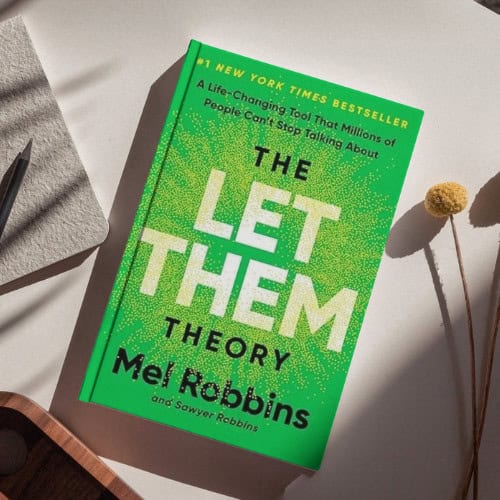
The Let Them Theory — Mel Robbins

Two words. Enormous shift. Mel Robbins’ The Let Them Theory is built around a surprisingly simple mindset change: stop trying to control what other people do, say, and think — and watch what happens to your stress levels, your relationships, and your sense of self.
Who Is Mel Robbins?
Mel Robbins is an acclaimed motivational speaker and author with a background in law who transitioned into personal development. She’s best known for The 5 Second Rule — a widely praised book offering strategies to overcome fear and hesitation. Her approach is practical, accessible, and grounded in everyday experience rather than abstract theory.
The Core Philosophy
The Let Them Theory is a mindset shift that helps people release control over external factors and focus on personal growth. The core philosophy centres on three components:
- Acceptance — embracing reality as it is, not as you wish it were
- Letting Go — releasing your grip on things beyond your control
- Personal Focus — directing energy toward your own growth and well-being
The theory’s power is in its simplicity. When someone makes a choice you don’t like — let them. When a colleague behaves in a way you can’t change — let them. When a friend flakes on plans — let them. Your energy goes to your response, not their behaviour.
The Fundamental Principles
Releasing Control Over Others
The first principle acknowledges that you cannot dictate others’ actions, decisions, or emotions. This reduces stress and anxiety while promoting healthier relationships and more peaceful interactions. Most relationship conflict stems from one person trying to manage another’s internal world.
Focusing on Personal Responsibility
The second principle emphasises taking ownership of your actions, emotions, and decisions. Benefits include:
- Building self-confidence and self-reliance
- Adopting a proactive approach to challenges
- Fostering a sense of empowerment and genuine control
| Benefit | What It Looks Like |
|---|---|
| Increased Confidence | Trusting your decisions without needing others’ approval |
| Reduced Stress | Letting go of others’ expectations creates a calmer daily life |
| Greater Fulfilment | Pursuing your own goals leads to a purpose-driven existence |
How “Let Them” Transforms Your Mindset
Shifting from External to Internal Focus
By moving away from seeking external validation, you cultivate self-worth independent of others’ opinions. This enables decision-making based on your values rather than others’ expectations — a fundamental shift that changes how you experience daily life.
Breaking Free from Others’ Expectations
Releasing the burden of meeting others’ expectations significantly reduces stress and anxiety. When you stop auditioning for approval, you create space to pursue what actually matters to you.
Applying The Let Them Theory
In Relationships
The theory encourages giving children autonomy to make decisions and learn from mistakes, fostering independence and resilience. In romantic partnerships, it promotes healthier dynamics by encouraging both people to respect each other’s autonomy rather than seeking to manage or fix each other.
At Work
Focusing on your own responses to colleagues rather than trying to control their behaviours or outcomes transforms the workplace experience. Leaders who adopt this approach empower team members to make decisions and take ownership, fostering more collaborative and innovative environments.
In Social Life
You cannot control others’ behaviour, but you can control your responses. This mindset helps maintain positive, supportive relationships while creating a less stressful social environment — particularly useful in managing social media comparisons and FOMO.
The Psychological Benefits
Reduced Anxiety and Stress
Releasing the need to control others demonstrably lowers stress. The anxiety that comes from monitoring, managing, and worrying about other people’s choices is significant — and largely invisible until you remove it.
Increased Self-Confidence
Focusing on personal responsibilities builds accomplishment and self-worth. When you stop measuring yourself against others’ choices, you start recognising your own progress.
Greater Life Satisfaction
Releasing the burden of controlling others and focusing on personal growth promotes contentment. Life becomes simpler, and your energy goes toward things that are actually within your influence.
Practical Exercises
Daily affirmations: Start with releasing control over others and trusting their decision-making abilities. A simple daily reminder — “I can’t control that, and that’s okay” — rewires habitual thought patterns over time.
Journaling prompts: Reflect on where you’re expending energy trying to manage others’ behaviour. What would change if you let that go?
Mindfulness practices: Meditation and deep breathing help you stay present and reduce anxiety about others’ actions — creating space between stimulus and response.
Conclusion
By releasing the need to control others and focusing on personal responsibility, you break free from external expectations and cultivate a more authentic, fulfilling life. This mindset shift redirects energy toward personal well-being, relationships, and aspirations.
The theory isn’t passive. “Let them” isn’t “I don’t care.” It’s “I care about what I can actually influence.” That distinction — and the freedom it creates — is what makes this book worth reading.